The Dürrenbergers of Allgäu, Germany
Our German Origins
My mother's side of the family carries a surname that turns heads. Dürrenberger — or Durrenberger in its Americanized spelling — is uncommon enough that people who share it sometimes assume they must be related. As it turns out, that assumption is wrong, and proving it required a DNA test. But I'm getting ahead of myself.
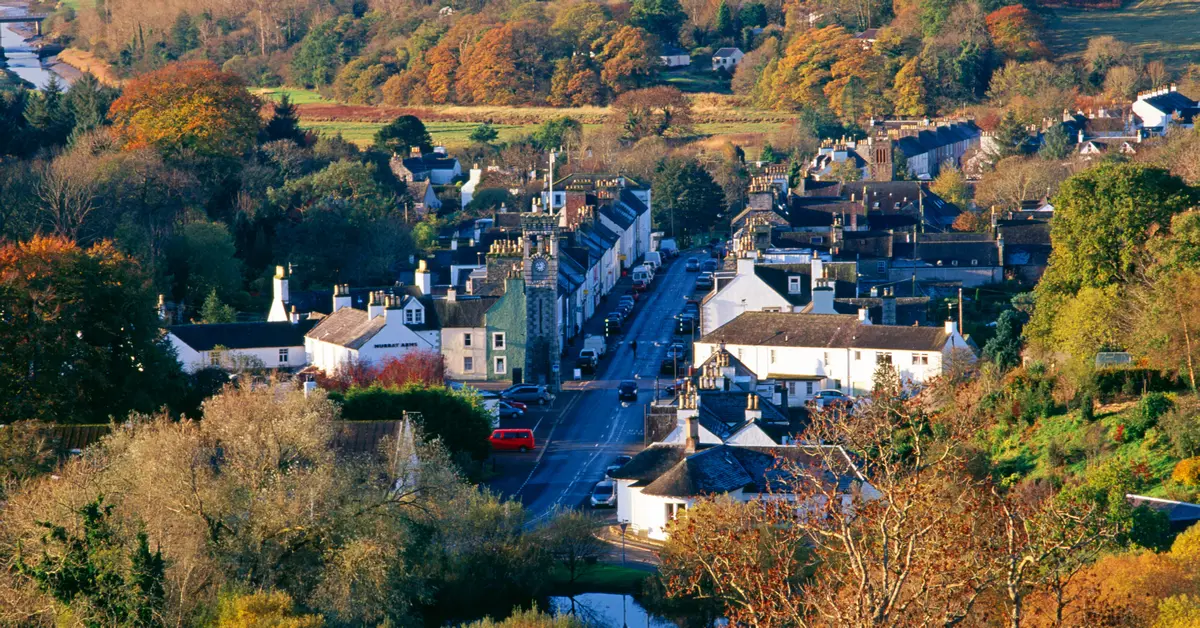
The Dürrenbergers I descend from came from a small village in the Allgäu region of what was then the Kingdom of Württemberg in southern Germany. The village is called Primisweiler — a quiet farming community near the town of Wangen im Allgäu, tucked into the rolling pre-Alpine hills where Württemberg meets Bavaria. The landscape there is everything you'd expect of the German countryside: green meadows, dairy farms, onion-domed churches, and a pace of life that hadn't changed much in centuries.
A Name with Deep Roots
The Durrenberger surname is believed to have originated in the Austrian region south of Salzburg, near a mountain called the Dürrnberg. The name is occupational and geographic in nature — essentially meaning "of the dry mountain" in German — and over time bearers of the name spread into Württemberg, Alsace-Lorraine, and Switzerland. In the United States, Durrenbergers have traced their origins to all three of those regions, which eventually led to some genealogical confusion that DNA testing had to untangle.
The Minnesota Durrenbergers — my family — are not related to the Durrenbergers who emigrated from Alsace-Lorraine around 1840 and eventually put down roots in Texas. Despite sharing an uncommon surname, the two families have entirely separate origins. That distinction matters, both for genealogical accuracy and for understanding who we actually are. Related surnames showing similar DNA profiles include Derryberry, Dirnberger, Durenberger, and Terryberry — a reminder of how names shift and drift across languages and centuries.
The Primisweiler Line
My earliest documented Dürrenberger ancestor is Martin Dürrenberger, a farmer born about 1695 in Primisweiler. His descendants remained in the Allgäu for generations, farming the same region their parents and grandparents had farmed before them. The village church — St. Clemens Parish Catholic Church — stands in Primisweiler to this day, and it was in parishes like this one that births, marriages, and deaths were recorded in the careful hand of local priests. Those records, eventually accessible through German archives and LDS Family History Centers, are what made reconstructing this family line possible.
For most of the 18th and early 19th centuries, the Dürrenbergers of Primisweiler stayed put. Immigration to America was not yet the common path it would become. Then, in 1852, everything changed.
The Crossing: Gebhard Ignatius Dürrenberger
The single Dürrenberger who brought this family line to America was Gebhard Ignatius Dürrenberger, born January 27, 1818 near Wangen-Primisweiler. He was the only member of this branch to emigrate.
Why he left is not entirely clear. German records suggest he may have been married to a woman named Barbara, and her death may have been the catalyst that set him on the path to America. Whatever the reason, he crossed the Atlantic and arrived in the United States — census records indicate his arrival as June 1854 from Württemberg, though family accounts place his departure in 1852. He was naturalized in 1855.
What we know is that he arrived not as a young adventurer but as a mature man of 36, with enough capital and agricultural experience to begin farming almost immediately. He settled in the Minnesota River Valley, in Sibley County, Minnesota — fertile prairie land that must have reminded him, in some ways, of the farmland he had left behind in the Allgäu.
Gebhard Ignatius farmed in Sibley County and eventually retired to Le Sueur, Minnesota, where he died in 1900 at the age of 82. He left behind a large family — many children and grandchildren who fanned out across Minnesota and beyond.
From Minnesota to the Pacific Northwest and Beyond
Among Gebhard's many descendants was my mother, Patricia Mary Durrenberger, born in 1926 at Perham, Minnesota. She carried the Dürrenberger line forward — and when she and my father's family came together, the Gordon and Durrenberger lines merged into the family history I've spent decades researching and documenting.
I've never made it to Primisweiler, though it remains on my list. But I've spent time with the records — the parish registers, the immigration documents, the Minnesota census entries — and through them I've come to know something of what Gebhard Ignatius left behind and what he carried with him across the Atlantic.
Researching the Dürrenbergers
This line has its genealogical mysteries. Despite thorough searches of passenger lists and German immigration records, no direct arrival record for Gebhard Ignatius has been found. We rely on census data, naturalization records, and family tradition to piece together the story of his crossing. It's a reminder that immigration research in this era is often incomplete — the paper trail has gaps, and some answers simply may not survive.
For those researching Durrenberger connections in Minnesota, the starting point is Sibley County records and the extensive family documentation on this site. The Dürrenberger family tree currently documents 3,167 people, and continues to grow as new records and family contributions come in.
Could We Be Related?
If you have Durrenberger ancestry connected to the Allgäu region of Germany — or to Sibley County or Le Sueur County in Minnesota — I'd be glad to hear from you. Over the years this project has introduced me to cousins I never knew existed, and that is honestly the best thing about it.
Please feel free to contact me. I try to respond to every message.
— Sandy Gordon, Sequim, Washington, USA